
Ever turned on the tap expecting a refreshing glass of water, only to get a chlorine-flavoured surprise? Trust me, I’ve been there. Here in Perth, our tap water is tested to ridiculously high standards – but that doesn’t always guarantee it tastes or feels perfect. A home water filter installation can become your new best friend, quietly transforming ordinary tap water into something you’d actually enjoy drinking.
I remember moving into my first Perth rental and being a bit naive about our famously ‘clean’ water. The Water Corporation really does a great job (they sample thousands of water tests every year), yet I still found myself wondering what else might be in the glass beyond H₂O.
Whether you’re battling a faint chlorine tang, some sediment, or just craving that pure bottled-water vibe, a solid filter can make your life (and your cuppa) so much better. It’s like giving your tap a superhero cape; suddenly, even old pipes and chemistry can’t steal the show.
Of course, you could be adventurous and try a DIY fix. I actually gave it a go with a simple tap attachment once, but when things got a bit complex, I rang up a Professional Water Filtration System Installation expert. These pros have the right tools and know-how to hook everything up leak-free (no plumber’s crack in sight, I promise!).
They can assess your home’s unique plumbing, foresee any hiccups, and fit the system neatly out of the way. After they’re done, they’ll walk you through filter changes and maintenance. It’s peace of mind knowing a licensed plumber stands behind the install – sparing me the headache of random leaks in the future!
What’s in Perth’s Water and Why a Filter Helps?
Beneath the surface, Perth’s drinking water is indeed treated to the nines, but our local mix of sources can still leave quirks in taste and feel. Much of the tap water is a blend of desalinated seawater and groundwater from aquifers like the Gnangara mound. It goes through treatment – chlorine as a disinfectant, fluoride for tooth health – so you might notice a bit of a pool-like or metallic taste if you’re sensitive.
In fact, the Water Corporation tests tens of thousands of samples each year to keep our water safe, which is why WA has one of the lowest rates of water-borne illness worldwide. Still, even tiny traces of added chemicals can show up on your tongue (or in your kettle).
Perth also has some very hard water areas – minerals like calcium and magnesium that build up limescale in kettles, showers and taps. You might see white crust on your shower head or faucets, or feel dry skin after a long shower. And while levels are low, scientists have even found traces of PFAS (those ‘forever chemicals’) and microplastics in drinking water. No one has proven these are dangerous in our homes at current levels, but filtering them out adds an extra layer of safety and certainly peace of mind.
In short, think of a home filter as the final polish on our public water treatment. It can remove chlorine taste and odour, capture sediment or rust, soften the water (if it’s a multi-stage system with a softening stage), and even block tiny industrial contaminants.
For example, many families in Perth report cleaner showers and fewer scale rings after installing whole-home filters. At the very least, filtering often means fewer marks on glassware and less scrubbing on taps. It’s an extra level of care – and who doesn’t want their morning coffee brewed with really clean water?
Some common issues a filter can address:
- Chlorine Taste or Smell: Even safe levels of chlorine can leave a “pool water” flavour. A carbon filter knocks it out.
- Sediment/Rust: Older pipes or mains flushing can bring in tiny particles. A sediment filter keeps your water crystal clear.
- Hard Water Minerals: Calcium and magnesium cause scale. Some systems include a softener or scale-inhibitor to prevent buildup on faucets and appliances.
- Trace Contaminants: Filters can target heavy metals (like lead) or other chemicals, and advanced units can reduce PFAS or chlorine byproducts.
- Convenience & Taste: Ultimately, many people just want tap water that tastes like bottled spring water, without the cost and plastic waste.
By understanding what’s in the water and what you want out of it, you can pick a filter that truly adds value. For me, knowing every cup of tea or pasta simmer is made with a touch-filtered purity just feels like an upgrade to daily life.
Types of Home Water Filter Systems
Home water filters come in all shapes and sizes, from a simple pitcher to a whole-house monster. Broadly, they fall into point-of-use systems (filtering one tap or appliance) or point-of-entry systems (filtering all the water entering your home). Here’s a quick rundown of common options:
- Under-Sink Reverse Osmosis Systems: These multi-stage units sit in your kitchen cabinet. They typically include carbon filters plus a reverse osmosis membrane that removes almost everything (chlorine, lead, fluoride, bacteria, etc.), and a small storage tank. Treated water comes out of a dedicated faucet on your sink. It’s a popular choice for drinking water – your coffee has never tasted so crisp! (Above is an example of an under-sink RO system installed next to a water heater.) These usually cost a few hundred dollars plus plumber fees, but they turn your tap into a mini spring.
- Countertop or Faucet-Mounted Filters: Think of the classic pitcher (like Brita) or a small canister that screws onto your kitchen tap. These are the easiest to set up – often DIY – and handle chlorine, sediment, and some chemicals. For example, a diverter valve can hook a dual-carbon filter right onto your faucet in minutes. They’re cheap (often $50–$150) and portable. Drawback? Only one tap is filtered, and flow can slow down when the filter needs replacement.
- Refrigerator Filters and Filter Taps: Many modern fridges have built-in carbon filters to improve water and ice taste. Similarly, you can install a separate filtered tap or lead-free faucet in your bench. These give you convenient cold filtered water at one location. The filters inside need replacing every year or so, and performance varies by brand.
- Whole-House Filtration Systems: These are installed at your main water line (point of entry) so that every tap, shower, and appliance gets filtered water. Whole-house units can have one big sediment/carbon cartridge or multiple stages, and often include a water softener stage in hard-water areas. This means cleaner baths, no rusty stains, and prolongs the life of your heater and washing machine (no gunk building up inside). It’s the priciest route because it involves bigger hardware and professional installation, but it’s “set-and-forget” protection for your entire home. Many Perth families with very hard water or specific concerns go this route.
- Shower and Specialty Filters: There are also filters just for your shower head (to strip chlorine from your shower water, which can help sensitive skin) or UV sterilizers (to kill bacteria in well water, though not common on city supplies). For hardcore water lovers, even filter tents or portable bottles exist, but for a household solution, the above are the main players.
Each type has trade-offs. Under-sink RO systems give the purest drinking water but need a faucet hole drilled. Whole-house systems treat all water but are expensive. Countertop filters cost less but don’t eliminate every impurity. Depending on your goals (taste, health, appliance protection), you might choose one or combine types.
Installation Steps: What to Expect
So, you’ve picked a system. Now, what actually happens on installation day? Generally, this is a task for a qualified plumber, especially if you go beyond a simple pitcher. Here’s the usual step-by-step:
- Planning & Prep: The plumber will first inspect your plumbing layout. For an under-sink filter, they check that there’s room in the cabinet and an available cold-water line. For a whole-house system, they identify where the main water line enters your property. Sometimes a concrete slab or wall means extra labour (jackhammer, anyone?).
- Shutting Off Water: They’ll turn off the water supply to the area being worked on. This might be a local isolation valve or the whole house valve if needed.
- Mounting the Filter Unit: Next, they secure the filter housing or tanks. Under-sink units are usually screwed to the cabinet wall; whole-house tanks might sit on a concrete pad or shelf near the meter.
- Cutting and Connecting Pipes: The plumber cuts into the water line and installs the necessary fittings or bypass valves. For under-sink systems, this often means tapping into the cold-water line under the sink. For a dedicated tap (like an RO faucet), they may drill a hole into your sink or benchtop. All new connections (brass fittings, elbows, etc.) are tightened and sealed.
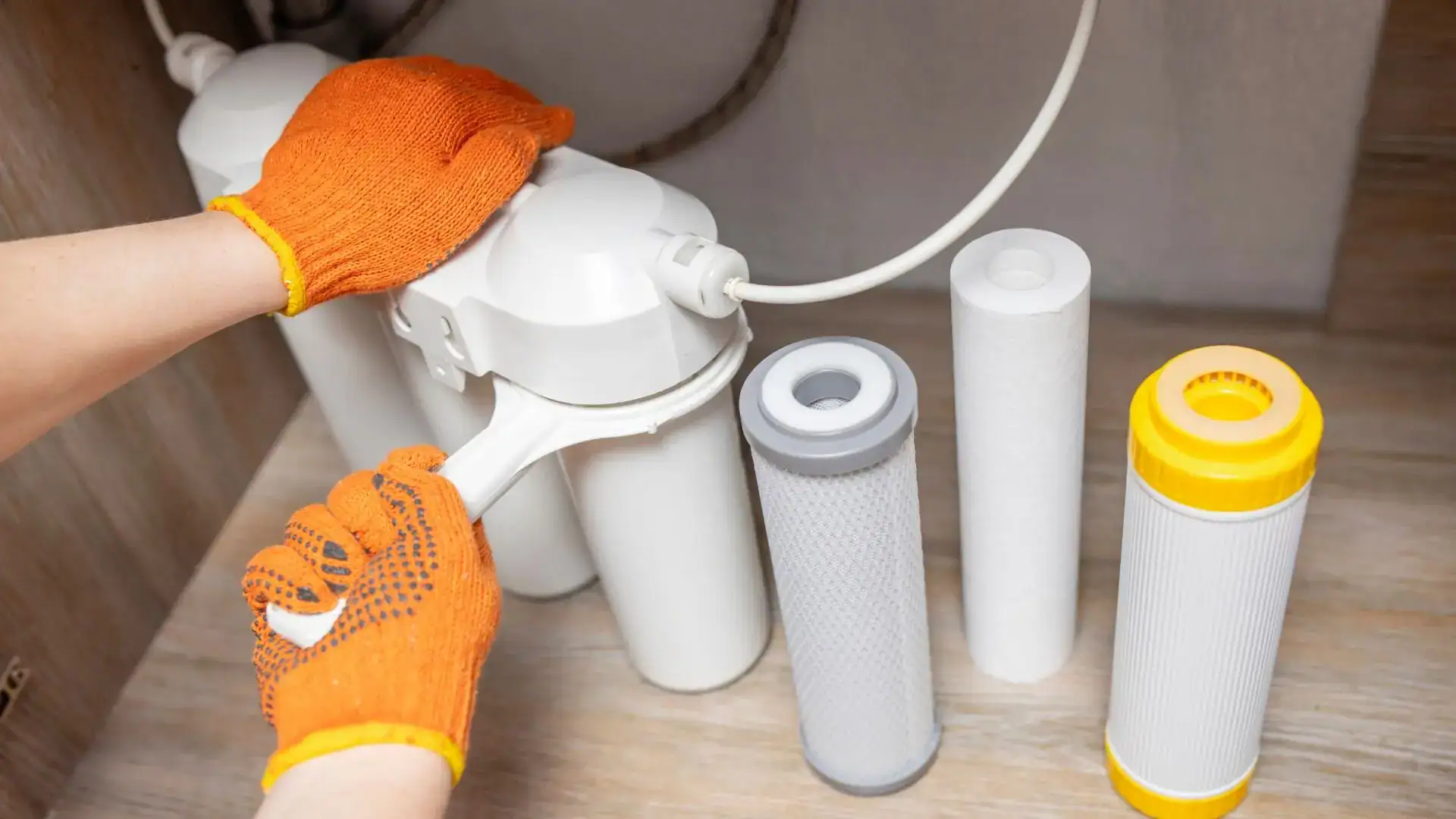
When the pros swing by, you might see them hunched under the sink, connecting all the pipes as shown above. They’re twisting tubing, hooking up the filter canisters or tanks, and securing tiny valves. It looks complex – but this is why a licensed plumber helps avoid any leaks or mistakes.
- Testing & Flushing: Once everything is plumbed in, the water is turned back on. The plumber checks for leaks at every joint (often using leak-detect spray). Then, they flush the new filters: letting water run through to clear out any carbon dust or factory residue. You might see water that looks cloudy at first – that’s normal.
- Orientation & Final Checks: With the system installed, your plumber will show you how to use any new tap and how to replace filter cartridges. Often they’ll check that your water pressure remains good (these filters usually maintain normal flow, especially if sized right). If you have pressure gauges or indicator lights, they’ll explain those too.
- Clean-Up and Handover: A reputable installer will clean up any debris (like metal shavings from drilling). They should also test your first glass of filtered water or recommend waiting a few minutes first. Then you’re pretty much set!
Overall, a basic under-sink filter install might take 1–2 hours. Whole-house systems can take a few hours or more, especially if plumbing needs re-routing. Don’t be surprised if the plumber arrives with a toolbox, an extra bucket (just in case), and maybe the theme tune to plumbing in their head.
Costs and Budgeting
“How much will this cost?” is often the first question on everyone’s mind. Naturally, prices vary based on system type, brand, and installation complexity. Here’s a handy table with ballpark figures in Australian dollars (AUD):
| System Type | Equipment Cost (AUD) | Installation (AUD) | Annual Maintenance (AUD) |
|---|---|---|---|
| Pitcher/Countertop Filter | $50 – $150 | DIY (free) | $20 – $50 (new filters) |
| Under-Sink Carbon Filter | $150 – $300 | $150 – $300 (plumber) | $50 – $100 (filter cartridges) |
| Under-Sink RO System | $400 – $800 | $300 – $450 | $100 – $200 |
| Whole-House Filtration | $800 – $2000 (tank & pre-filter) | $600 – $1200 | $150 – $300 |
| Water Softener (salt-based) | $1000 – $2500 | $500 – $1000 | $100 – $200 (salt, service) |
(These are typical ranges – actual quotes will vary by brand and job conditions.)
A few notes on those numbers:
- Tap/DIY Systems: The cheapest route is something like a pitcher or a simple tap diverter filter. They cost under $200 total and you can install them yourself. Bunnings, for instance, offers installation services starting around $226 for an under-sink filter if you’d rather pay for the pro touch.
- Under-Sink Units: Expect to pay a few hundred dollars for a decent carbon block or basic RO under-sink kit, plus a plumber’s hour or two (roughly $150–$300 labor). For example, industry info suggests an under-sink filter install in major cities usually runs around $250–$350. This fits Perth too, give or take travel.
- Reverse Osmosis: These are pricier, the membrane and tank bump the price. The kit costs around $400–$800, installation might be on the higher side of $300–$450 because it’s a bit more labor-intensive. But they offer deeper purification.
- Whole-House Systems: These can vary a lot. A simple sediment+carbon setup might start around $800 for parts, while more advanced multi-stage systems can hit $2000 or more. Plus, the labour: whole-house filtration often means working on the main supply line, which can be $600–$1200 or higher. One source notes Australians typically spend $1000–$5000 for a full-home unit, depending on needs. (Sure, that’s a range, but it captures the idea: be ready for the thousands.)
- Ongoing Costs: Remember filters need replacing. A carbon or sediment cartridge might be $30–$80 each and usually lasts 6–12 months. A typical RO membrane might go 2–3 years. Whole-house cartridge changes can cost $100–$300 a year if done by a pro. In our table we’ve rounded those out. It adds up, but think of it as preventative maintenance – much cheaper than replacing a shower head or boiler eaten by scale.
In practical terms, many Perth homeowners break it down to “a couple of grand up front, then maybe $100 a year in filters.” And when you compare that to paying for bottled water or constantly buying an external jug, it often pays for itself over time. Also, some people find that upgrading their water filter installation increases their home’s value or appeal (no doubt it looks fancy when selling a place with one installed!).
Maintenance & What to Expect
After installation, life with a water filter is mostly worry-free. The big thing is filter changes. Here’s a typical checklist:
- Filter Replacement: Most cartridges need swapping about once a year (give or take). Your installer will likely set a reminder for you. Some modern units have a gauge or smart sensor to signal when flow slows or a change is due. If not, just mark your calendar. Changing the filter usually means turning a valve, unscrewing the canister, swapping the cartridge, and closing it back up. Easy enough for a DIY weekend chore.
- Routine Flushing: After putting in a new filter, run the tap for a few minutes to clear any carbon dust. It’s normal to see brownish water for a short bit.
- Checking Fittings: It’s a good idea to glance under the sink or at the filter unit every few months to ensure no drips or corrosion. All connections should stay snug. If something feels loose, turn off the water and tighten.
- Annual Service (Optional): For whole-house systems, many people arrange a plumber visit once a year to refresh media (if needed) and ensure things are sealed tight. This can coincide with hot water system service or spring cleaning.
- Monitoring Water Quality: Keep an eye (and taste buds) on your water. If it suddenly tastes odd or looks cloudy, troubleshoot filter integrity or call your installer. But good quality systems stay consistent.
Overall, compared to most appliances, maintaining a water filter is simple. No complex tech or software, just clear water and a reminder to swap filters. And hey, when you notice your skin is softer or your spinach tastes better, you’ll know it’s working!
Conclusion
Installing a water filter in your Perth home is like hiring a little guardian for your tap. It costs a few bucks upfront and a regular bit of upkeep, but in return you get crisp-tasting water, fewer chemical traces, and extra longevity for your appliances. Imagine brewing coffee with ice-clear water, showering without chlorine smell, and watching your kettle stay scale-free. For many of us, that’s absolutely worth it.
Taking the plunge is simple: decide what kind of filter suits your needs, budget for the install, and enjoy peace of mind. Don’t hesitate to call a licensed plumber for a free site quote – they can tailor the perfect solution and do all the hard work. In the end, cleaner water is something everyone deserves. So why not make every drop count?
Ready to taste the difference? Reach out to a pro, schedule a check-up, or even tackle a DIY filter. Your future self will thank you on the next hot summer day with an ice-cold, perfectly clean glass of water.